
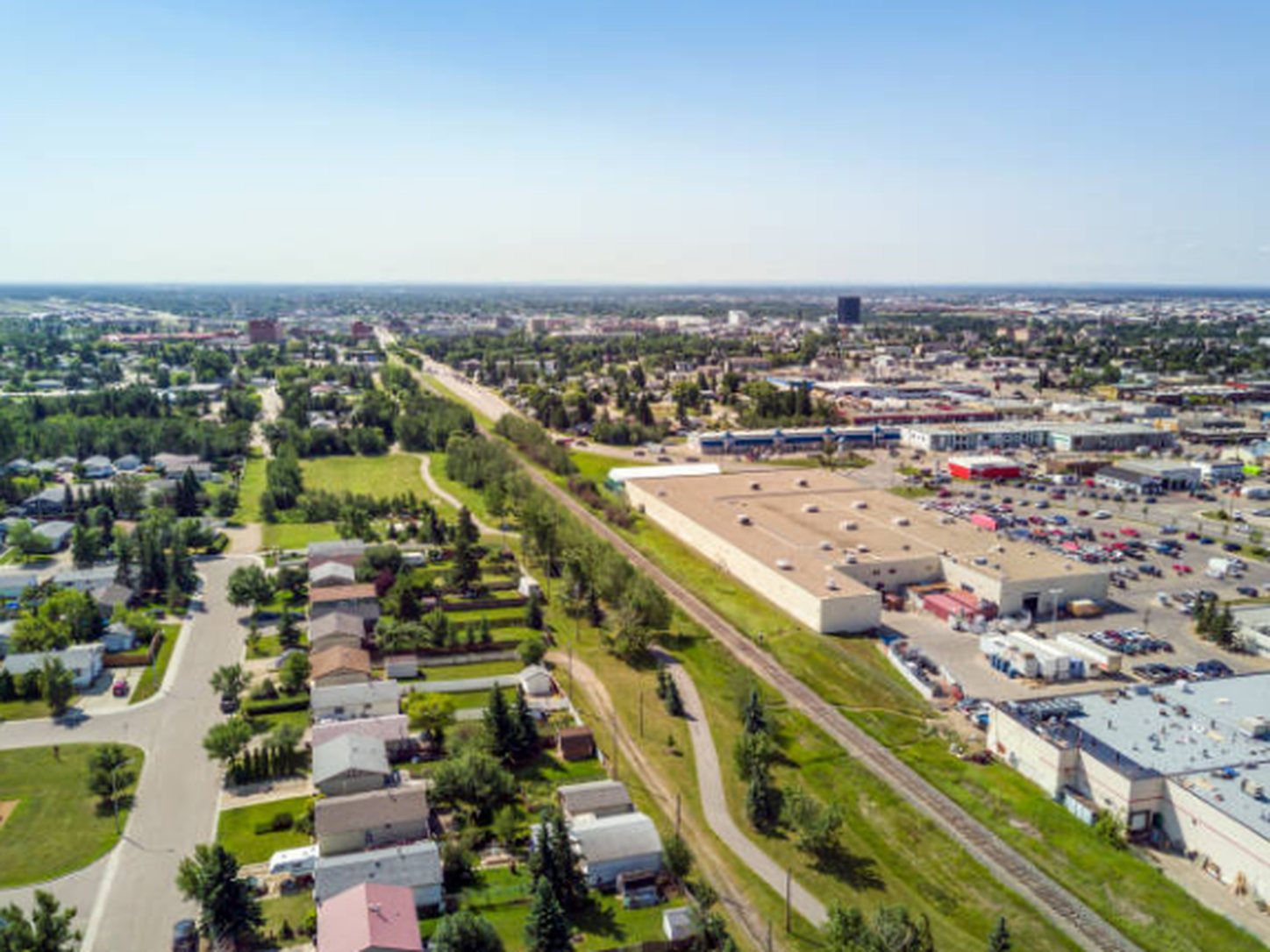
 Grande Prairie — from the great prairie to today
The first peoples & the great prairie
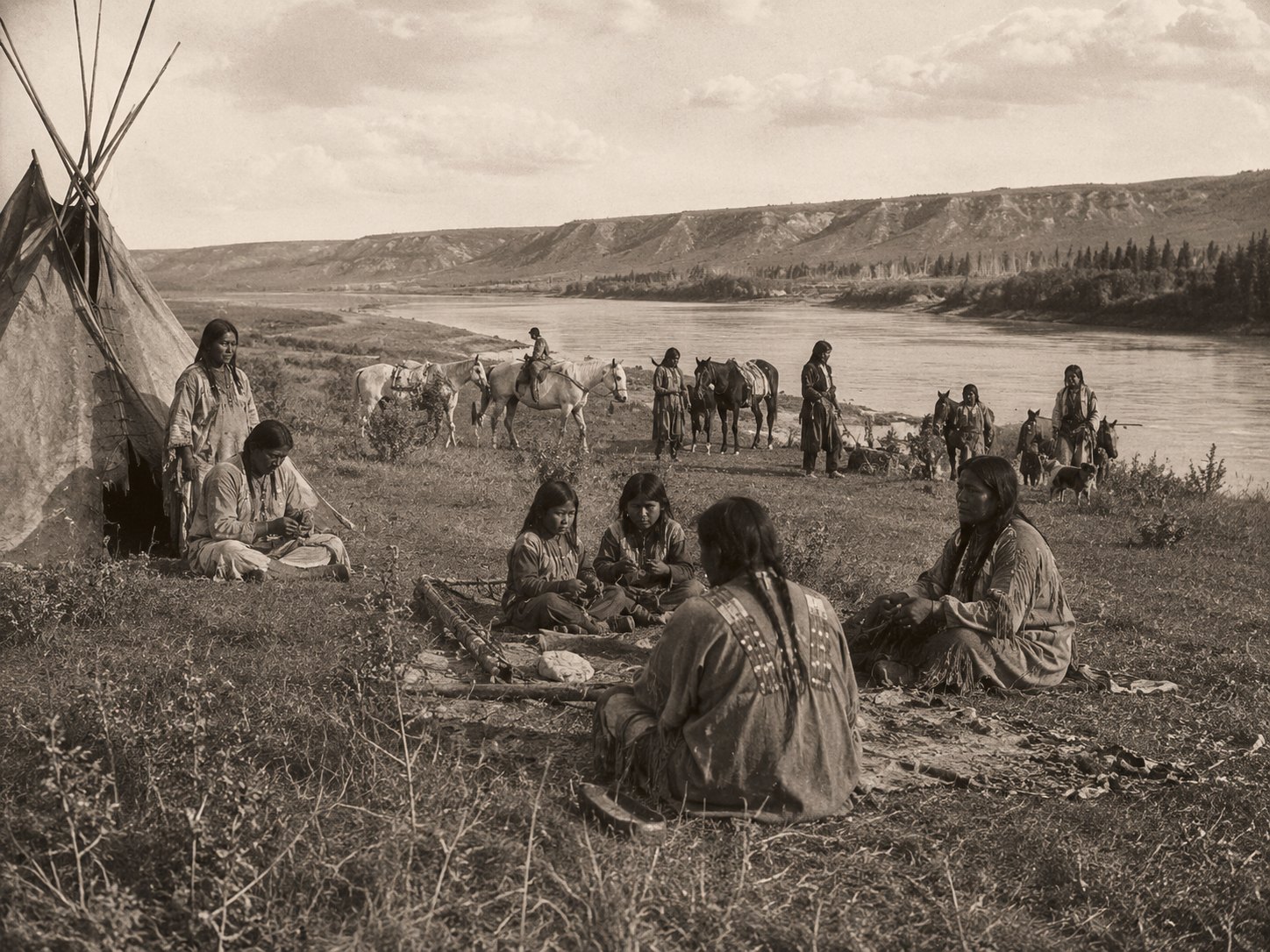
For centuries — long before any European set foot here — the Dane-zaa (Beaver) people lived on and travelled the lands that would become Grande Prairie, hunting the parkland and following the rivers of the Peace. By the late 1800s, Cree and Iroquois families were also settling the open plain, having moved north and west from the Jasper and Lac Ste. Anne areas. It was this vast natural clearing in the northern forest — a true "grande prairie" — that gave the future city both its site and its name.
The fur trade & Fort Dunvegan
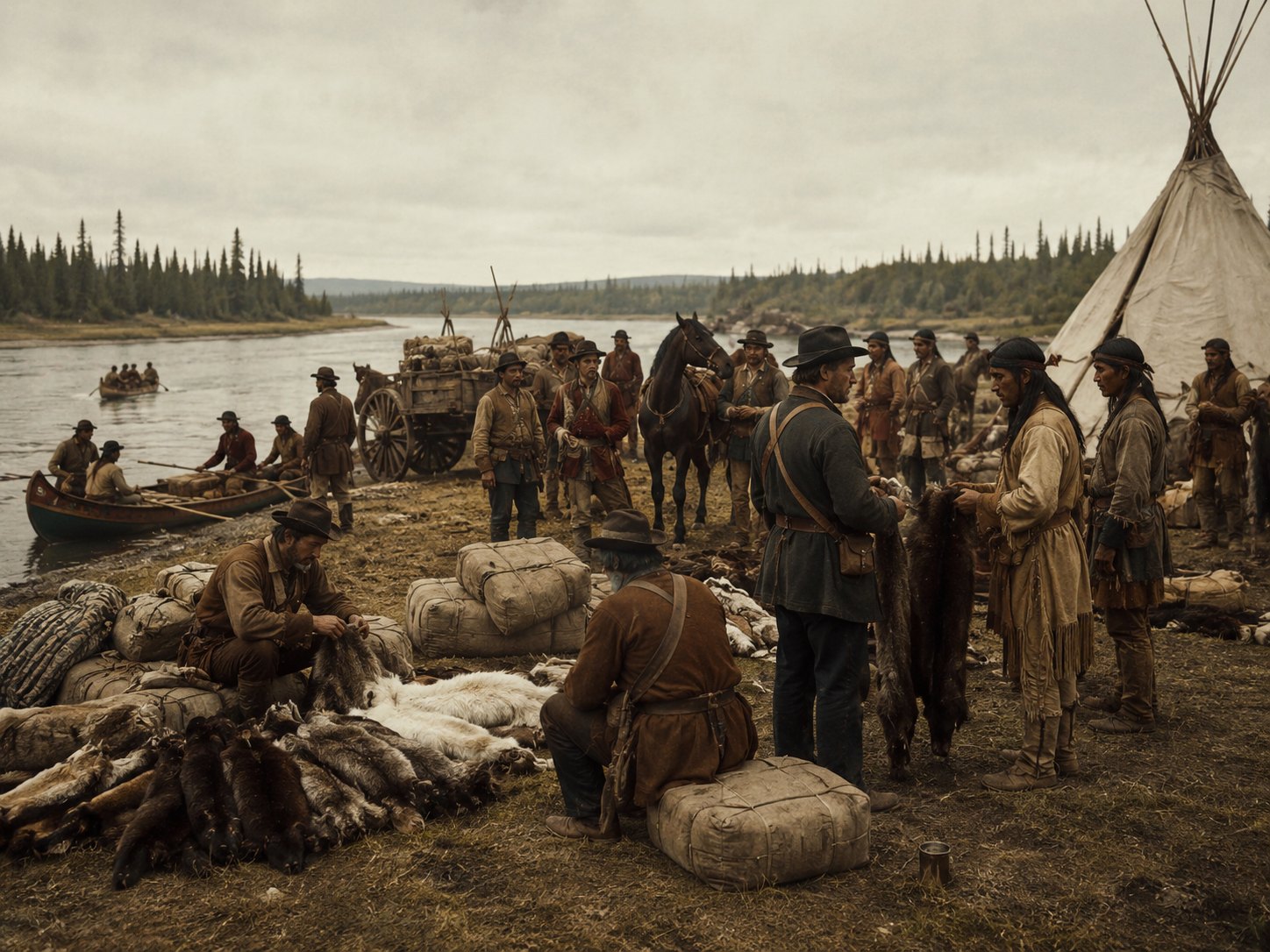
In the early 1800s the fur trade reached the Peace. The North West Company established Fort Dunvegan on the banks of the Peace River in 1805, and it — later joined by the Hudson's Bay Company — became the great trading anchor of the region for generations. Around 1880 the Roman Catholic missionary Bishop Émile Grouard recorded the name "La Grande Prairie" for the sweeping meadow south of the Peace, and the name stuck.
Surveyors, promoters & a paper "city"
As Canadian Pacific and geological surveyors reported on the "fertile belt," speculators moved fast. In 1908 the blacksmith George Breeden ran a sod-roofed cabin he called the Breeden Hotel for travellers passing through. When 17 townships were surveyed in 1909, a land rush followed. In 1910 the Argonaut Company — fronted by the lawyer-promoter W.A. Rae, working out of an Edmonton office under a banner reading "Grande Prairie City" — laid out a townsite of streets and avenues along Bear Creek, years before a single rail was laid.
The Edson Trail
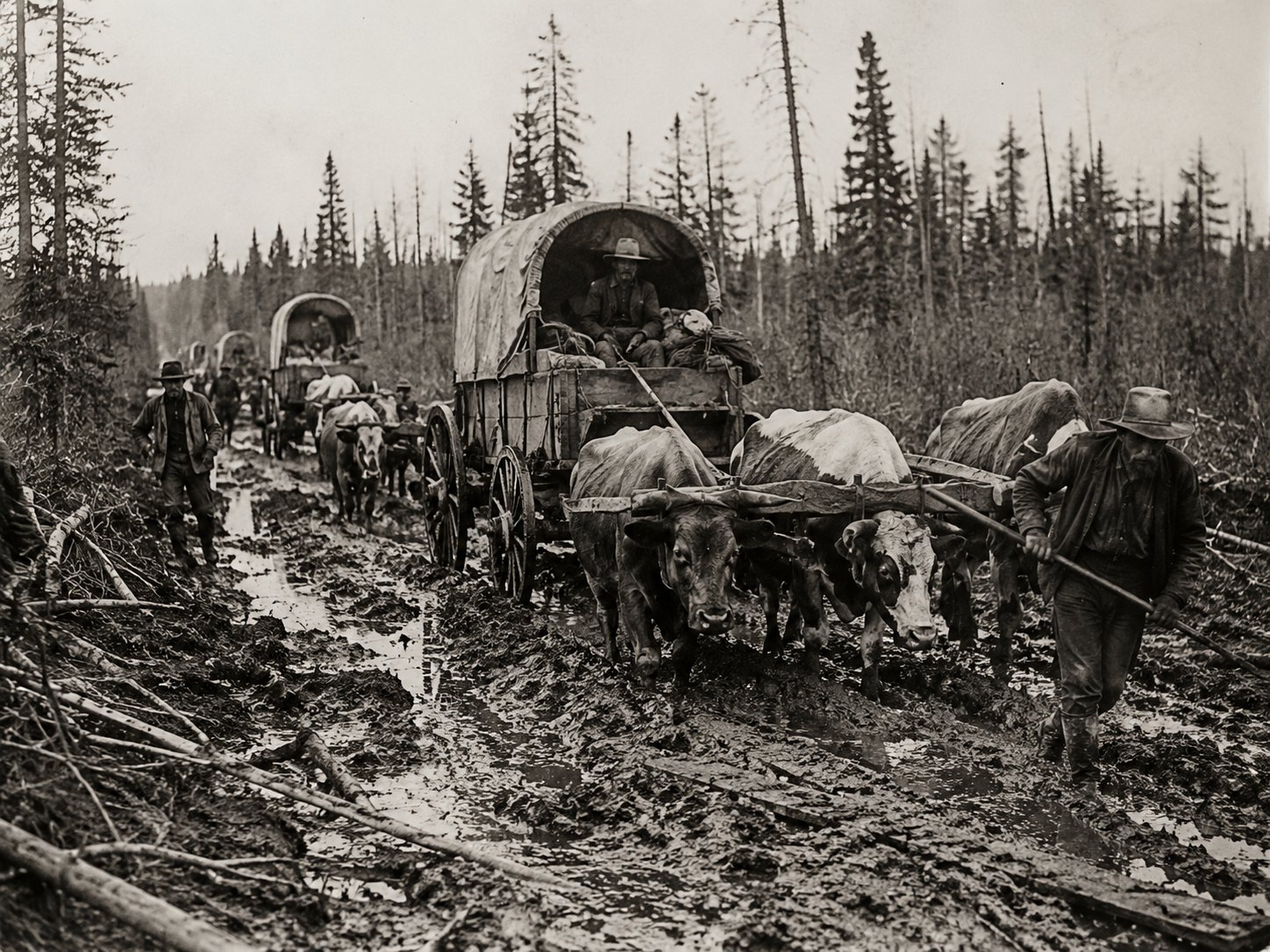
The town was born of sheer grit. Opened in 1911, the Edson Trail ran some 350 km from the railhead at Edson north to the Grande Prairie district — little more than a slash of cut bush and muskeg. In wet weather it became a nightmare of mud that swallowed wagons and oxen whole; many walked most of the way, and some never made it. It is the reason large-scale settlement came late to the Peace compared with the prairies further south.
Homesteaders & the Forbes
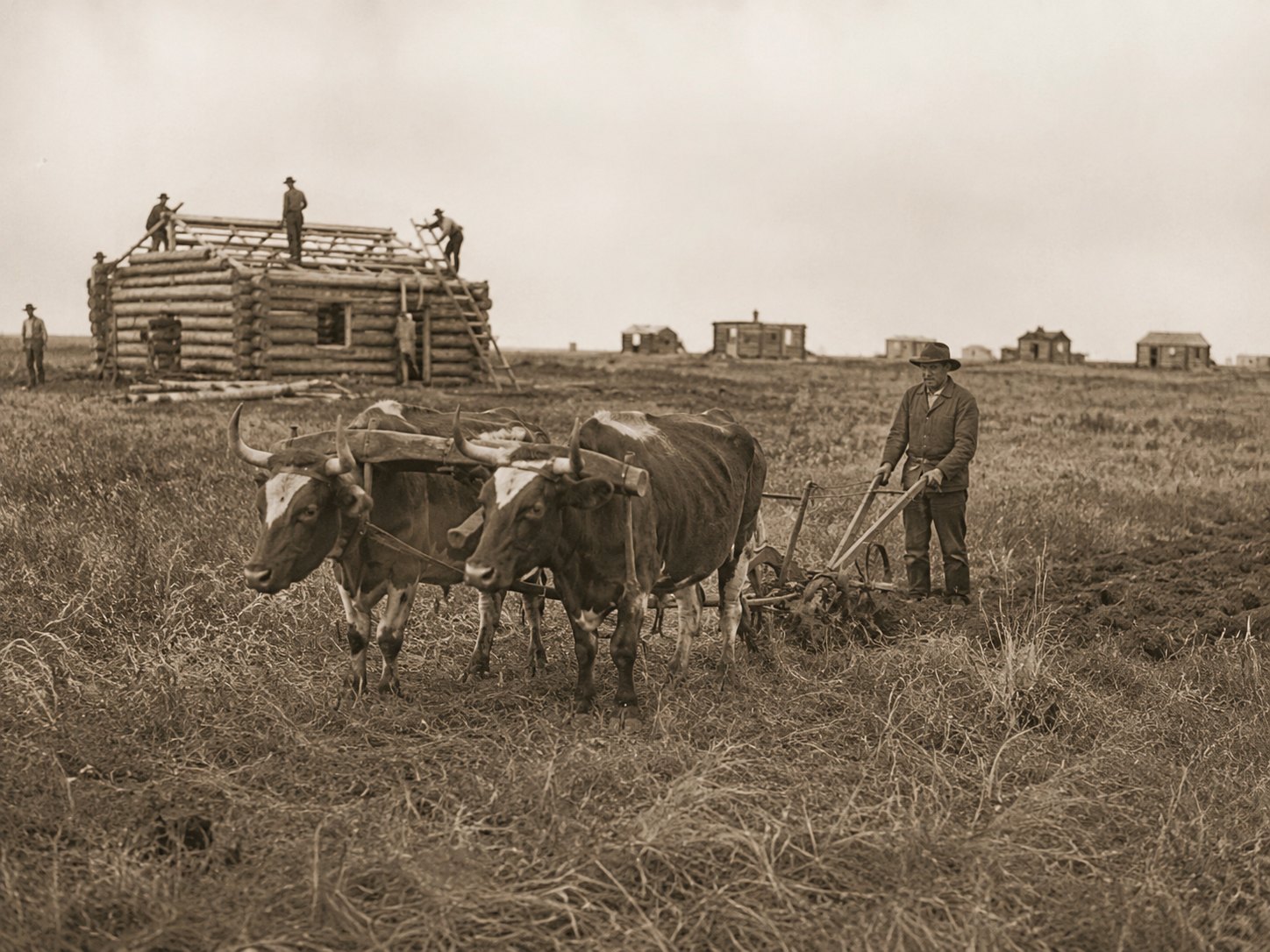
Those who arrived began breaking the rich sod and raising log homes. Among the first settlers were the Presbyterian missionaries Reverend Alexander Forbes and his wife Agnes Correll Forbes, a trained nurse, who arrived in 1910. They filed a homestead near Bear Creek, helped found McQueen Presbyterian Church, and opened the district's first Pioneer Hospital in their own log home in 1911. The Forbes Homestead still stands as the oldest log building in Grande Prairie — restored and run today as a museum by the Grande Prairie Museum.
A village takes shape
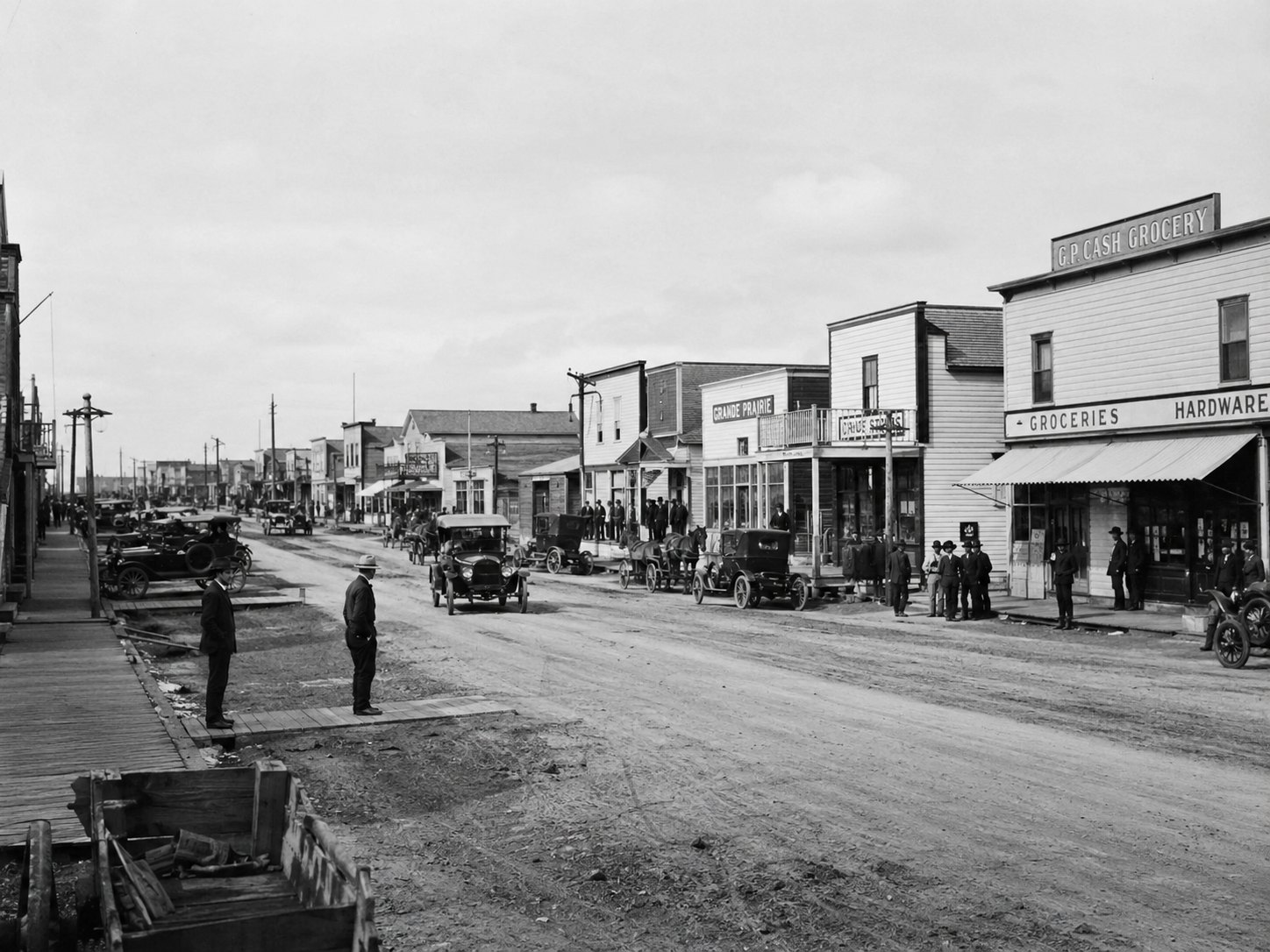
Business followed the settlers. By 1912 the townsite had a bank, hotel, post office and land office; early hotels included Salmond's and the City Hotel. In 1913 the first school opened with 13 pupils, and on March 25, 1913 editor W.C. Pratt rolled off Volume 1 of the Grande Prairie Herald — the ancestor of the Daily Herald-Tribune. On June 15, 1914, with roughly fifty souls, Grande Prairie held its first council and was incorporated as a village; Christ Church (Anglican) and an NWMP barracks went up the same year.
The railway arrives — 1916
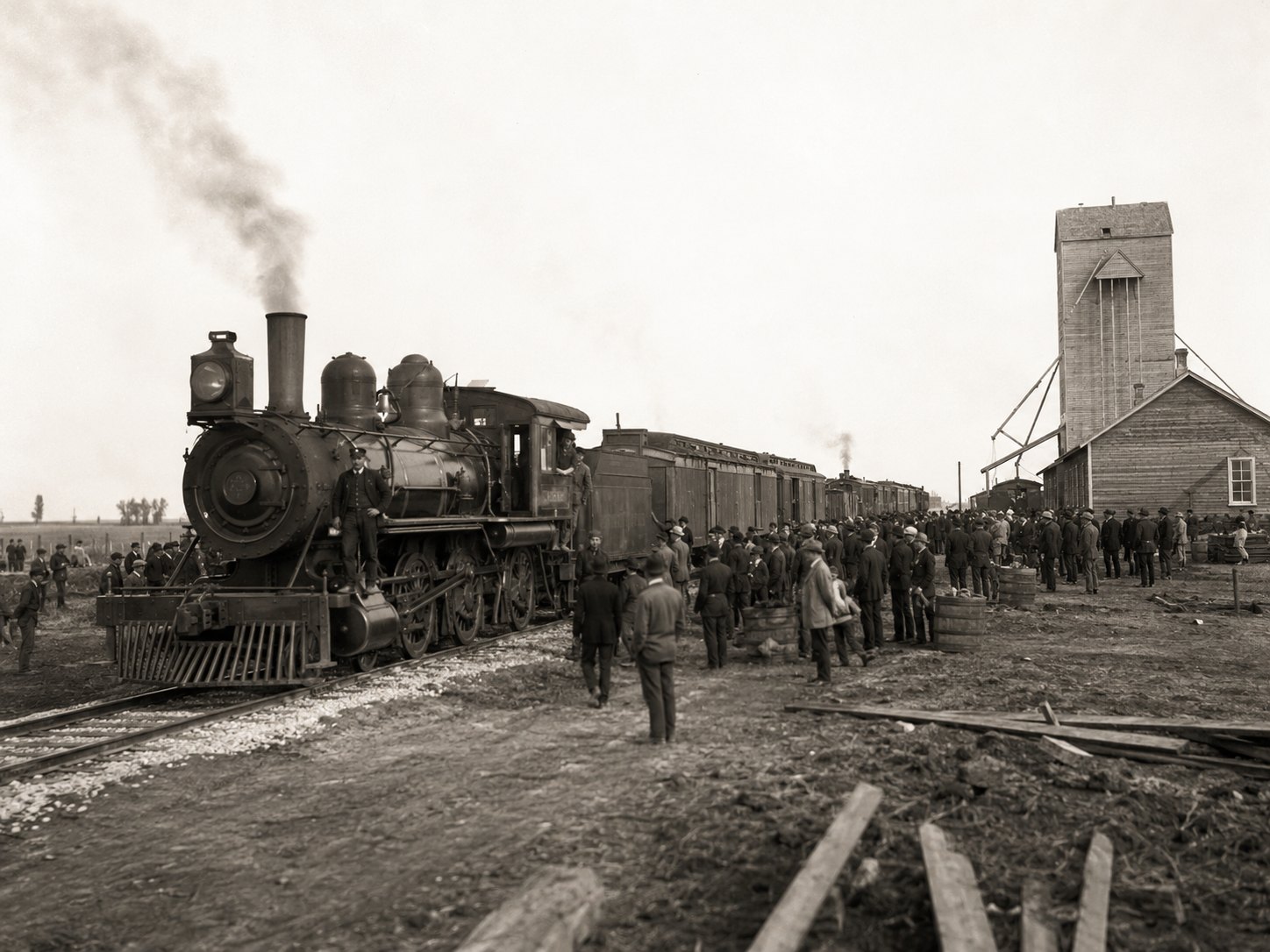
Everything changed when steel arrived. In 1916 the Edmonton, Dunvegan & British Columbia Railway (ED&BC) reached Grande Prairie as its terminus, ending the era of the long trail and opening the region's grain and cattle to outside markets. Elevators rose along the line, settlers poured in, and the population climbed past 1,000 — enough to incorporate as a town on March 27, 1919.
Recession, the Dust Bowl, war & the air age
A sharp local recession thinned the town in the early 1920s, but it rebounded, and through the Dust Bowl 1930s the Peace largely escaped the drought that ravaged the southern prairies — so settlers kept coming. Radio CFGP put the town on the map in 1937, and Peace Country aviation pioneers like Grant McConachie pushed northern air service forward. In the Second World War, Grande Prairie became a link on the Northwest Staging Route and a base for building the Alaska Highway from Dawson Creek north.
Bear Creek & Muskoseepi
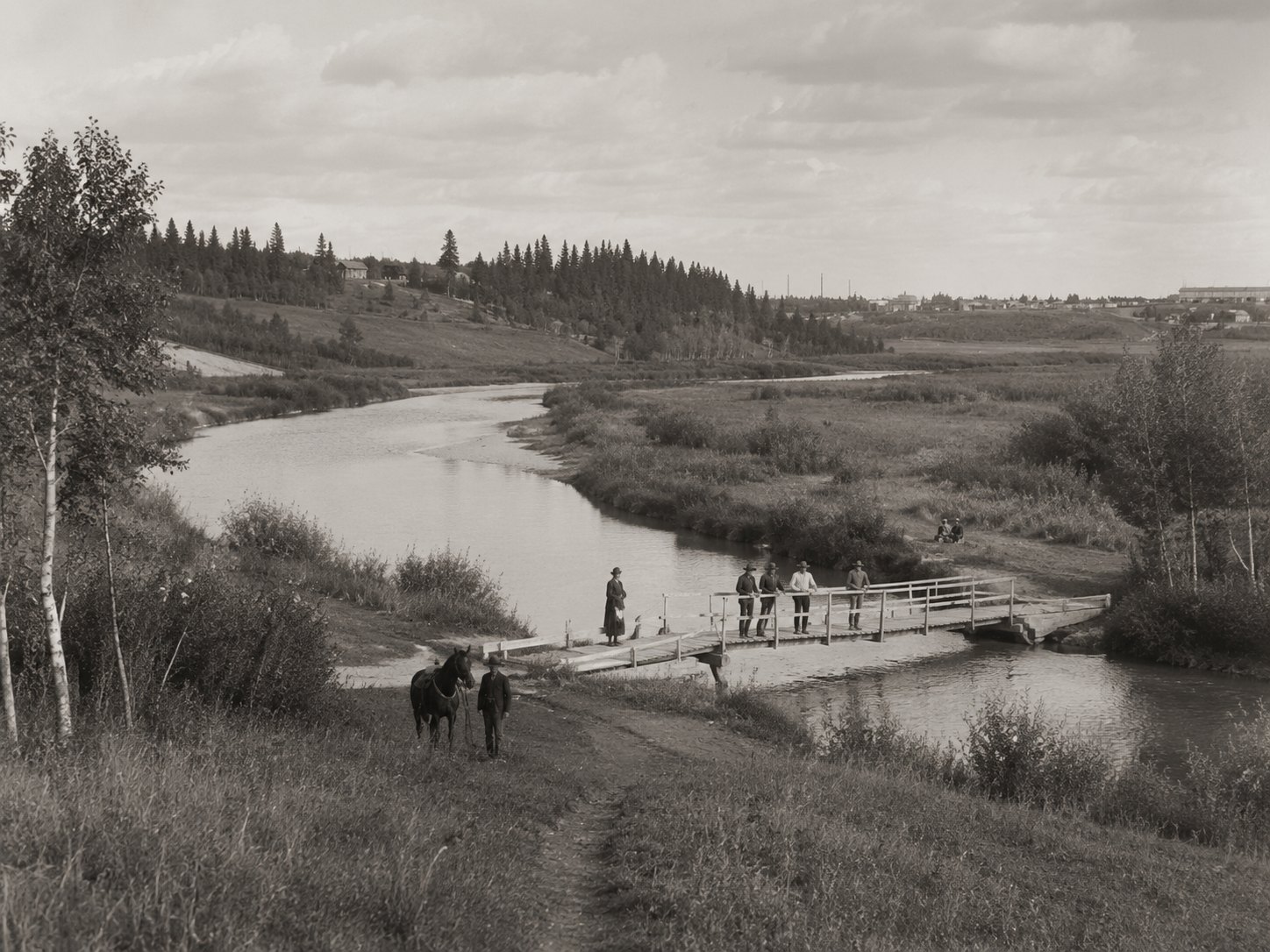
Winding through the middle of it all is Bear Creek — Muskoseepi, from the Cree for "bear creek." Today Muskoseepi Park follows the creek's green valley for more than 1,100 acres through the centre of the city: the living thread that ties modern Grande Prairie back to the land the Dane-zaa and Cree first knew.
Becoming a city — 1958
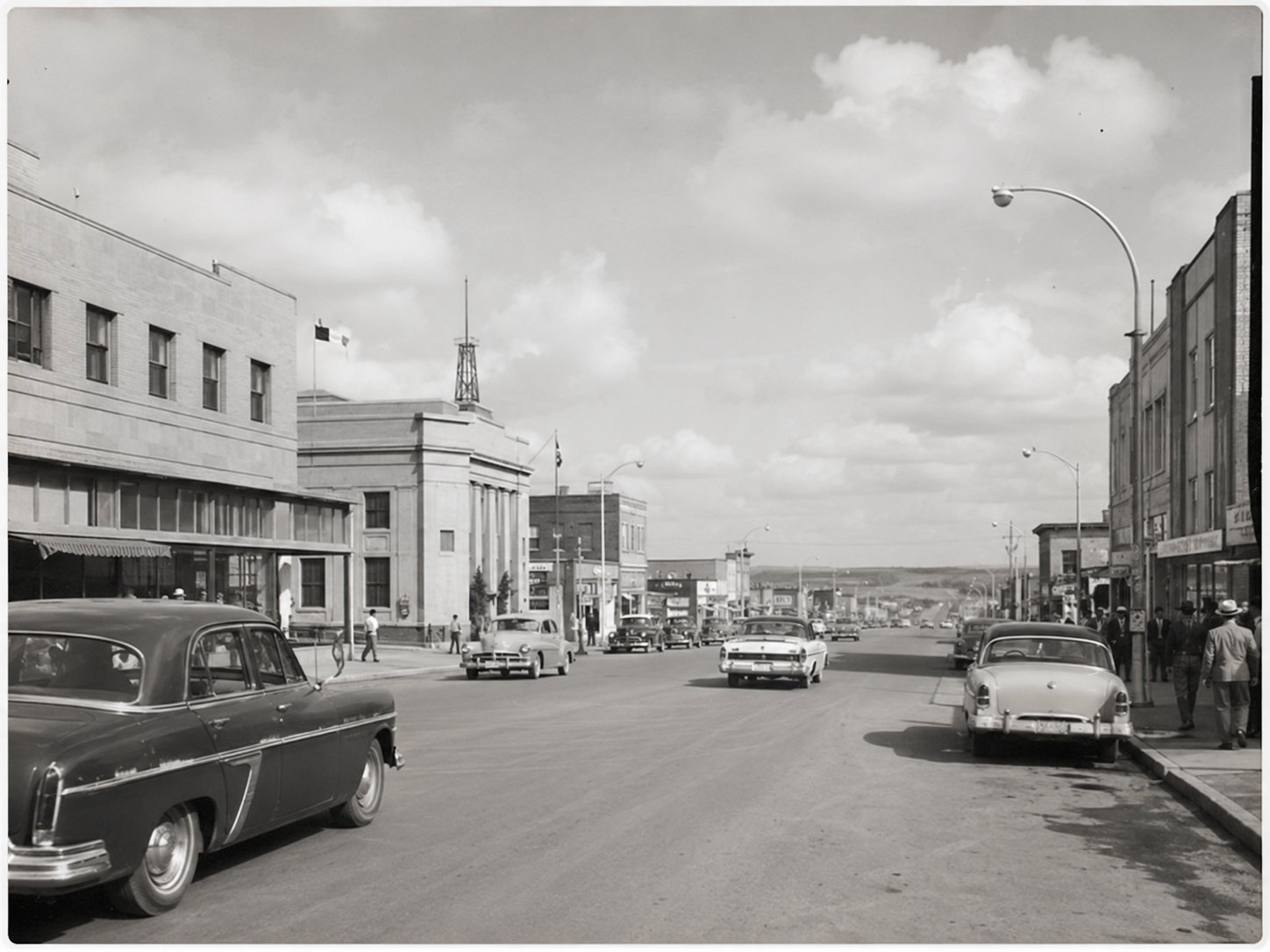
Just over four decades after that first village council, Grande Prairie was incorporated as a city on January 1, 1958, the province's newest and most northerly city, with a population of 7,227. To mark it, northern guide Henry McCullough re-enacted the pioneer days by carrying a replica city charter nine days on horseback; a crowd of some 12,000 met him as it was handed to the first mayor, J.C. Mackie.
Oil, forest & field
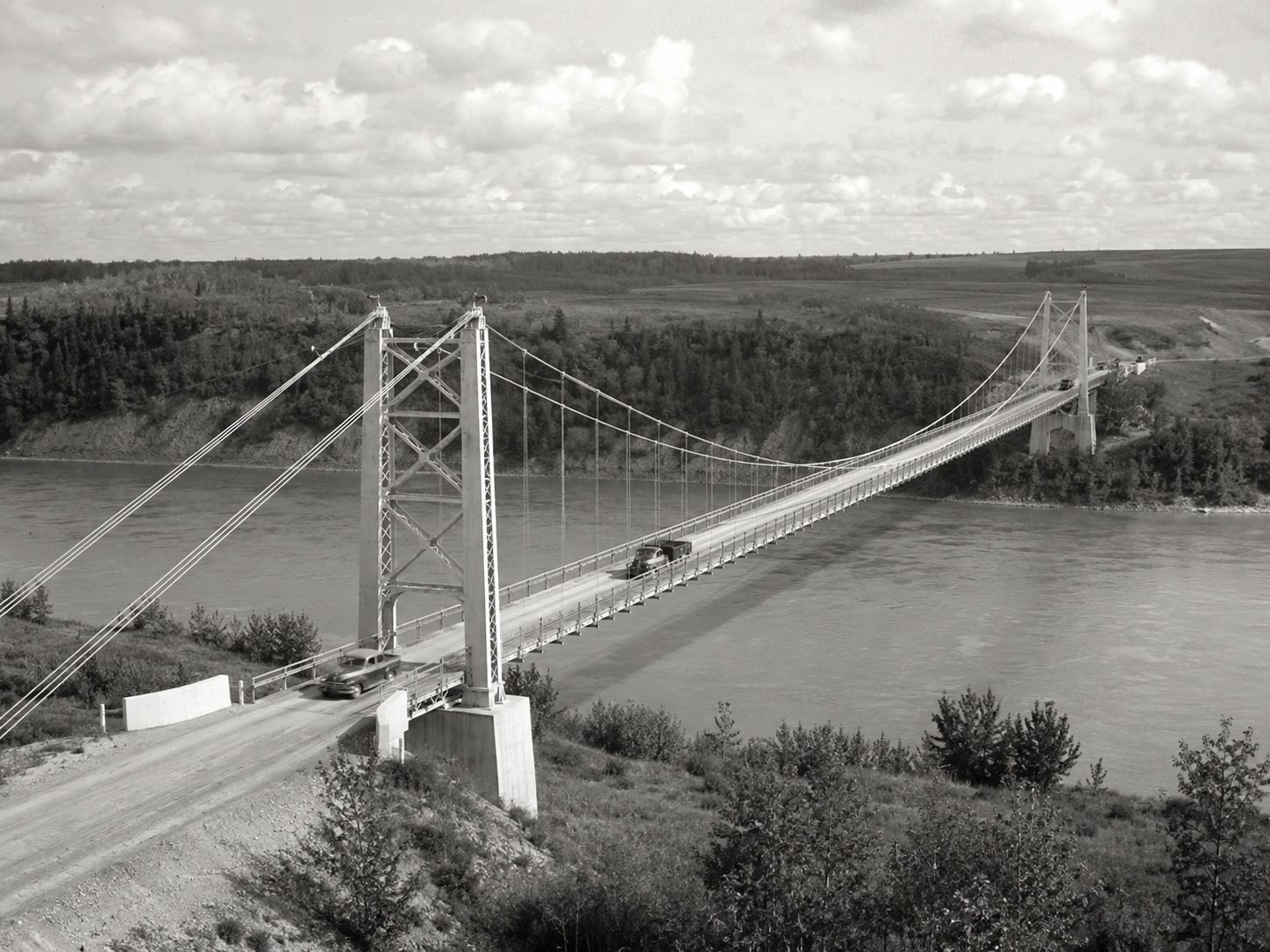
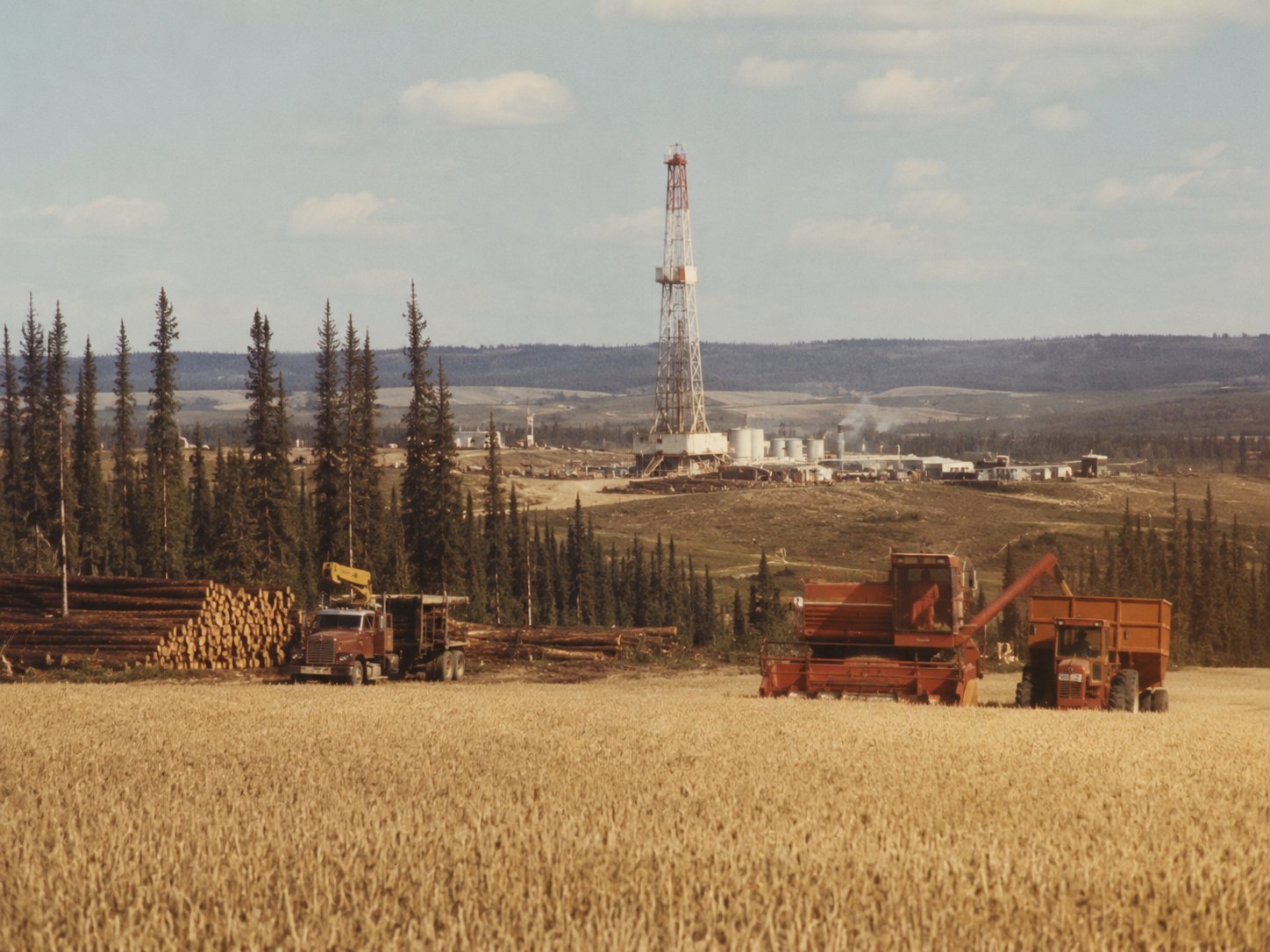
The post-war decades brought a resource boom. After the 1947 Leduc oil strike, oil and natural gas exploration spread across the Peace; grain and cattle from some of Canada's most productive farmland filled the elevators; and in 1970 Procter & Gamble Cellulose announced an $80-million pulp mill south of the city, anchoring a major forestry industry. Grande Prairie became known as the Swan City, for the tundra swans that rest here each spring. The renowned architect Douglas Cardinal gave the growing city one of its landmarks with his sweeping, organic design for the regional college (today's Northwestern Polytechnic).
Grande Prairie today
From a fur-trade landmark to a pioneer trail's end to a city of tens of thousands, Grande Prairie is the beating heart of the Peace Country — young, diverse, and still carrying the resourceful, neighbourly spirit of the people who first broke this ground. That story is exactly why this site exists: to celebrate and serve the place we call home.